

Touch is the most emotionally loaded form of body language. It can comfort, build trust, strengthen relationships, and create connection—but when used incorrectly, it can also cause discomfort, misunderstandings, or conflict. Non verbal communication is a powerful medium when used correctly.
Touch is the most emotionally loaded form of body language. It can comfort, build trust, strengthen relationships, and create connection—but when used incorrectly, it can also cause discomfort, misunderstandings, or conflict. Non verbal communication is a powerful medium when used correctly.
Because touch is both powerful and sensitive, understanding when and how to use it is essential for anyone who wants to communicate with emotional intelligence.
Touch is the first sense humans develop. As infants, we rely on touch for safety and bonding. As adults, touch continues to influence our emotions.
Touch can:
A simple hand on the shoulder can communicate empathy more effectively than a paragraph of comforting words.
Touch releases oxytocin, the bonding hormone. This is why:
Touch also reduces cortisol, the stress hormone, making it a powerful emotional regulator.
The most socially acceptable form of touch in professional environments.
A good handshake is:
It communicates confidence and respect.
Examples:
Used to comfort, encourage, or show empathy—best in personal relationships.
Examples:
These express deep emotional bonding.
Happens in crowded spaces or during movement.
Reading reactions helps avoid misunderstanding.
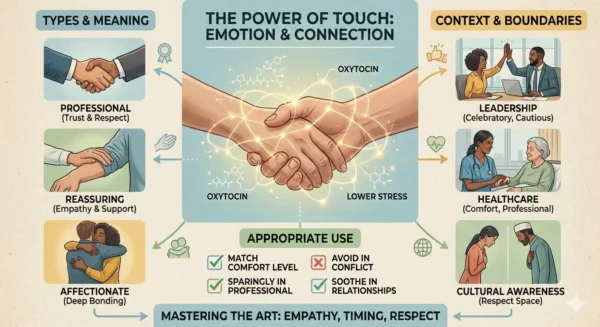
Touch must be used cautiously.
A handshake or celebratory high-five is usually acceptable.
Avoid touch that can be misinterpreted—especially across gender or hierarchy.
Touch is rarely appropriate, but handing items gently or maintaining warm tone conveys care without physical contact.
Touch strengthens bonds—like a supportive pat or a hug during emotional moments.
Touch is essential for emotional closeness.
Holding hands, hugging, or placing a hand on someone’s back can resolve conflict or increase intimacy.
Doctors and nurses often use gentle, professional touch to calm patients and build trust.
Touch expectations differ across cultures:
Personal comfort also matters—some people simply dislike being touched.
Always observe body language signals:
If someone seems uncomfortable, stop immediately.
False.
A respectful handshake or congratulatory pat can strengthen rapport.
It’s context and intent that matter.
Incorrect.
A crushing handshake communicates insecurity or aggression, not confidence.
Not true.
Touch can signal:
The meaning depends on timing, context, and expression.
If they step back or stiffen, stop.
Handshake > forearm tap > nothing else.
It may escalate emotions instead of calming them.
Touch increases emotional safety.
This prevents misinterpretation.
Touch is powerful, emotional, and deeply human medium of non verbal communication —but must be used with awareness. When applied with sensitivity, it can comfort, motivate, and strengthen relationships. When misused, it can create discomfort and confusion. Mastering the subtle art of touch requires empathy, timing, and respect for boundaries.


